
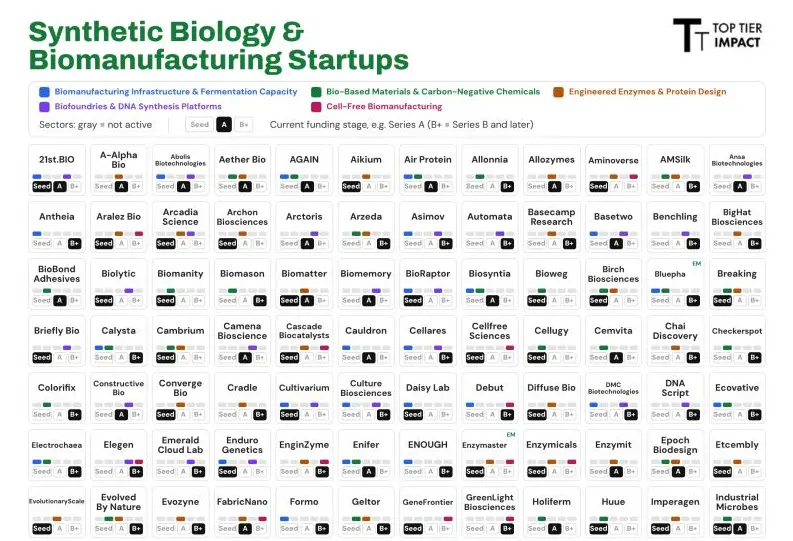
This week I came across a map from Alessa Berg and the team at Top Tier Impact. It shows more than 160 startups using biology to make the things we use every day: food proteins, plastics, dyes, building materials, textiles and chemicals. Some use fermentation, some use algae and some use enzymes. All of them take their cues from nature.
It’s a remarkable list, and I’ll admit it made me a little emotional. When I started out in natural products, ideas like these were a dream.
One line in the post stuck with me. Designing a new microbe or enzyme can take a few months, but getting it into a commercial tank at a price that competes with oil still takes years.
To me, that gap is about balance. The science runs fast, while manufacturing, money, people and patience all run at their own pace. Startups that lose that balance tend to tip over, no matter how good the idea is.
The good news is that some people have already walked that road.
Jay Harman spent about twenty years studying how water moves in nature before he turned it into fans, mixers and pumps that work at industrial scale. He knows how long it takes to go from a beautiful idea to something a factory will actually buy.
Gil Friend has spent close to fifty years helping companies build businesses that work the way living systems do. He can tell a strategy that holds up from one that only sounds good in a pitch deck.
Richard Bush has led environmental work at the scale of whole regions and taught it in the classroom. Today he’s helping a young algae company in Australia find its footing.
None of them would claim to have all the answers. But they’ve made the mistakes, found the shortcuts and learned where the balance point is.
So here’s my humble suggestion for the founders on that map, and the ones who’ll be on the next one: reach out. Find the Jays, the Gils and the Richards in your world. Buy them a coffee, tell them what you’re building and ask what they wish they’d known.
Most of them are glad to help. They just have to be asked.