
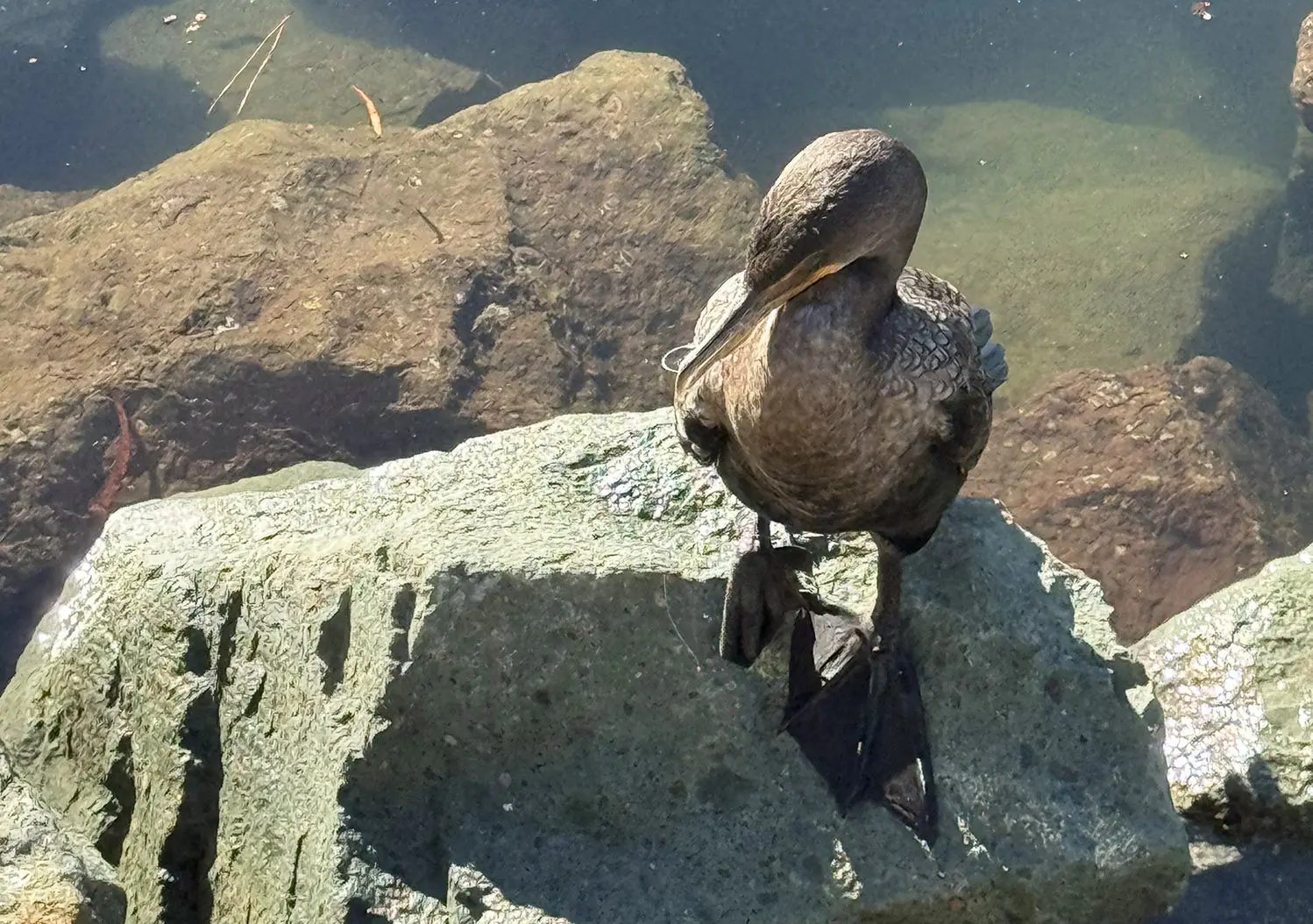
If the first lesson of that Saturday morning walk was about empathy, the second lesson was about constraint. It was about learning when to hold back, when to let a process unfold, and how to sit with the discomfort of not being in control.
After calling SeaWorld, I spent hours following the injured bird along the water. It was tangled in heavy monofilament fishing line, bound at the leg and mouth. I tracked it continuously, lost sight of it for a tense period, and finally spotted it again as it made its way over to the transient dock-the dinghy dock where local boaters pull up to reach their anchored vessels.
That was where the scene changed.
Seeing the bird in distress, a few people on the dock rallied together. They wanted to help. They began formulating plans to catch the bird using towels, intending to hold it down and cut the fishing line clear.
Standing there, I felt a heavy surge of conflict. I knew SeaWorld was supposedly on the way, but hours had passed without direct confirmation. I didn’t know if or when rescue would arrive. Meanwhile, these folks had good intentions. They were acting out of immediate concern, using the only tools and knowledge they had.
Who was I to step in and tell them they were wrong? Who was I to stop someone from trying to help when inaction felt just as risky? If they managed to catch the bird and snip the line, it might survive. If I interceded with uncertain news about SeaWorld, I might just discourage people who were genuinely trying to do good.
Realizing I couldn’t control the outcome, I had to make a choice. I turned and walked away from the dock.
I couldn’t bear to watch the struggle unfold, not because I didn’t care, but because I realized I had reached the limit of what I could influence. Stepping back required a different kind of discipline-a lesson in chilling out, trusting the process, and accepting that well-meaning people have to navigate their own response to a situation.
I left the waterfront that morning carrying a complex mix of emotions: concern, uncertainty, and a lingering ache for the bird. But beneath the tension was something quiet and profound.
Years ago, I might have processed a moment like that with detachment or rigid control. Feeling that raw emotional tug, holding space for both the bird’s plight and the human instinct to help, was proof of an opening heart. Emotional awareness isn’t always comfortable, and practicing non-interference when you care deeply is never easy. It’s a practice I’m still working on every day-learning when to act, when to yield, and how to honor the feeling either way.