
This is the first of three posts that follows the small revelations that can happen on a morning walk through Ocean Beach. At the center is the LivingVoltaire: a neighborhood observer, successful businessman, quiet philanthropist, dog-treat distributor, and unlikely philosopher whose daily post turns passing moments into civic lessons.
Voltaire Street gives him the name. Ocean Beach gives him the material.
There are certain days in Ocean Beach when the neighborhood does not so much wake up as erupt.
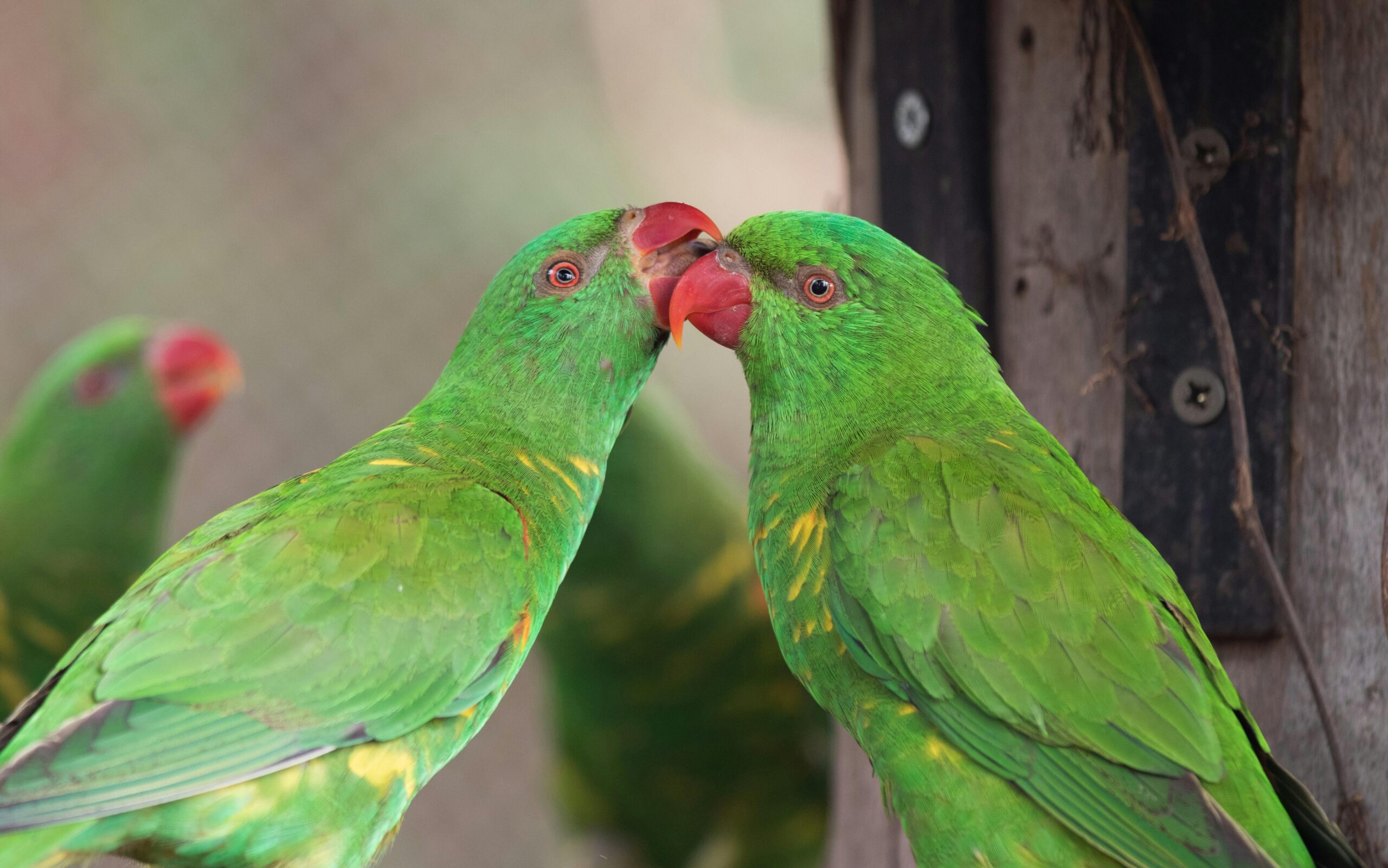
Today, walking through OB, I heard them before I saw them. The parrots. Loud, wild, invisible at first, ricocheting their calls between the palm trees like green-feathered lunatics on espresso. They were dive-bombing through the fronds, shrieking, circling, disappearing, then returning in a rush of wings and noise. Supposedly these were mating calls, though “calls” feels far too polite. This was more like a tropical argument being held at full volume above Newport Avenue.
I took a picture of the palms where they were hanging out, though the photo hardly does the scene justice. All you can really capture is the place. The real performance was in the sound, the motion, the erratic electricity of it all. They reminded me of crazy bats, if bats had escaped from a Caribbean cocktail party and developed very strong opinions about real estate.
I’ve always loved these parrots. They arrive every spring around Ocean Beach and Point Loma, making a tremendous fuss, pairing off, courting, squawking, swooping, and generally acting like they own the sky. Then, after the mating season, the story goes, many of them head east, twenty or thirty miles inland, toward places like El Cajon, where they find safer spots to nest and lay their eggs.
It is one of those San Diego stories that feels half nature documentary, half neighborhood mythology.
So I did what one does in Ocean Beach when seeking wisdom. I went to the Living Voltaire of OB.
Every town needs a philosopher, and Ocean Beach has always been particularly good at producing barefoot sages, porch historians, and men who know things because they were there, or know someone who was. The Living Voltaire did not disappoint.
I asked him, “What’s the story with the parrots?”
He leaned into the memory like he was dusting off an old bottle from a very peculiar cellar.
Early eighties, he said. Maybe 1982. There was a pet shop on Newport Avenue called Newport Pet. One day, the shop caught fire. When the shopkeeper arrived, faced with smoke and panic and cages full of living things, he made the only humane choice available. He opened the cages and let the animals go.
Among them, according to the tale, were roughly thirty parrots of various kinds.
And from that accidental liberation, or so the legend goes, came the wild flocks that still haunt Ocean Beach, Point Loma, and the coastal neighborhoods today. The descendants of escaped pets, now fully adopted by the palms, the cliffs, and the eccentric soul of San Diego.
There is also a Point Loma group, the “Point Loma parrots,” hanging around the rocks and the bluffs, loud as ever, cousins in chaos to the Ocean Beach flock. Same birds, same lineage, same green flash of mischief against the sky.
Whether the fire story is perfectly documented or simply the version OB prefers to believe almost doesn’t matter. It has the ring of truth because it fits the place. Ocean Beach would, of course, have parrots descended from a dramatic jailbreak. Of course they would mate in the palms, scream like joyous maniacs, then commute inland to raise families. Of course the origin story would come from a pet shop fire, a compassionate shopkeeper, and a neighborhood philosopher.
That is the froth and glory of OB.
The parrots are not just birds here. They are living folklore. They are winged gossip. They are proof that sometimes a neighborhood’s character is not planned, zoned, approved, or branded. Sometimes it escapes from a cage during a fire and spends the next forty years screaming from the palm trees.
And honestly, Ocean Beach would be a little less Ocean Beach without them.