
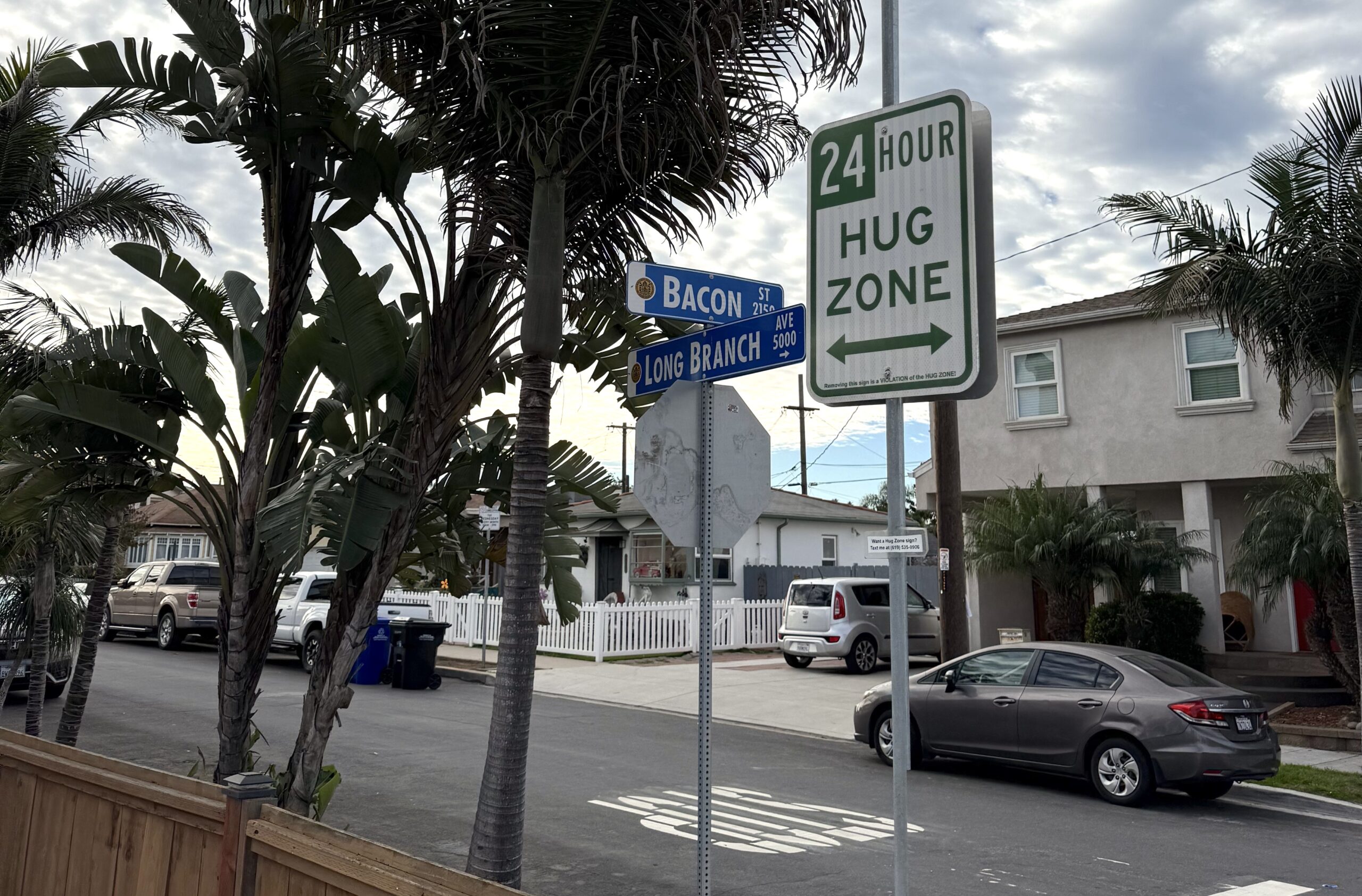
I’m standing on the corner of Long Branch and Cable in Ocean Beach, looking at a little lit‑up sign that says “Hug Zone.” It’s gray, wet, about 53°, and I realize: I could really use a hug right now. Out here in the drizzle, that simple idea lands deeper than any motivational quote.
A hug is about as basic as it gets—two people, a pause, and a little warmth – but it’s quietly powerful. When we hug, our bodies release oxytocin, the bonding hormone that tells our nervous system, “You’re safe for a moment.” Cortisol, the stress hormone, drops. Heart rate and blood pressure can ease down. Shoulders relax. For a few seconds, the body steps out of “fight or flight” and back into “you’re okay.”
The mind feels it too. A good hug can cut through loneliness, anxiety, and that low‑grade heaviness we often carry but don’t name. It doesn’t fix our problems, but it changes the state we’re in while we face them. There’s something grounding about being literally held in place while the world keeps rushing around you.
And then there’s belonging. We live in crowded cities and scroll through endless feeds, but many people are starved for healthy, human touch. A hug says, without any speeches, “You matter. You’re not doing this alone.” Imagine if airports or busy downtown corners had “hug zones” the way they have smoking areas or charging stations – a quiet, human reminder that connection is just as necessary as power or Wi‑Fi.
So that’s the small message from a rainy OB morning: we all need hugs – from a health perspective, a mental perspective, and a belonging perspective. If you’re reading this, consider it your nudge for today: find someone it’s safe to hug, slow down for a few extra seconds, and let that simple act do its quiet work. Give someone a hug. You might both need it more than you know